For many solo founders, the dream of building a business often hits a hard ceiling: the 24-hour limit of a single human being. You start with a vision of freedom and growth, but quickly find yourself buried under a mountain of administrative tasks, lead follow-ups, and technical troubleshooting.
The traditional advice is to "hire your first employee," but for a lean startup or a solo consultant, the leap to a full-time UK payroll is massive. Between National Insurance contributions, pension requirements, and the sheer overhead of office space and equipment, a full-time hire can often create more stress than they relieve.
This is where the secret of the "Virtual Scale" comes into play. Modern founders aren't building empires with desks and water coolers; they are building them with strategic outsourcing and automated systems. By leveraging Virtual Assistants (VAs) alongside smart tech, you can double your output without ever posting a job listing on LinkedIn.
The High Cost of the "Solo" Mindset
The biggest obstacle to scaling isn't a lack of capital; it’s the "I can do it better myself" trap. While that might be true for your core product or service, it is rarely true for your bookkeeping, your initial lead vetting, or your calendar management.
When a founder spends three hours a day on $20-an-hour tasks, they are effectively paying themselves $20 an hour. This is one of the primary reasons why founders burn out, as they lose sight of the high-level strategy that actually drives revenue.
Scaling requires a shift from doing the work to designing the system that does the work. To scale without a full-time team, you must transition from being a technician to being an architect.

Why VAs Beat Full-Time Hires for Early-Stage Growth
For a growing business, flexibility is the ultimate currency. A full-time employee is a fixed cost that remains the same whether you have a record-breaking month or a seasonal slump. In contrast, a Virtual Assistant provides an elastic resource that can grow or shrink with your needs.
There is a common misconception that VAs are only for basic data entry. In reality, the modern VA landscape includes specialists in CRM management, technical SEO, and complex project coordination.
If you are wondering, "Do you really need a virtual assistant?", the answer usually lies in your growth trajectory. If your revenue is stalled because you don't have time to sell, the ROI of a VA is almost immediate.
The Benefits of the VA Model:
- Reduced Overhead: No office space, no hardware costs, and no employee benefits packages.
- Global Talent Access: You aren't limited to the talent within a 30-mile radius of your home.
- Specialized Expertise: You can hire a VA for 10 hours a month specifically for HubSpot management and another for 10 hours of content production.
- Rapid Onboarding: Professional VAs are used to jumping into different environments and can often become productive in a fraction of the time a traditional hire takes.
The "Who, Not How" Framework
In his book Who Not How, Dan Sullivan argues that when we face a challenge, our first instinct is to ask, "How can I do this?" Instead, we should ask, "Who can do this for me?"
For a solo founder, the "Who" is often a combination of a skilled VA and a robust automation stack. For example, instead of asking how you can manage your growing list of leads, you should find a "Who" to set up a lead-scoring system in your CRM.
This approach is exactly why UK startups are hiring virtual assistants in 2025. They aren't looking for more "staff"; they are looking for specialized outcomes that allow them to remain lean and agile.

Building the System: The Role of SOPs
You cannot successfully delegate to a VA if your processes only live in your head. The secret to scaling without a full-time team is the Standard Operating Procedure (SOP).
An SOP is a documented, repeatable blueprint for a specific task. If you want a VA to handle your client onboarding, you need to provide a step-by-step guide that includes:
- Where to find the client data.
- Which email templates to use.
- How to trigger the next step in the business growth cycle.
Documenting these processes might feel like it takes more time than just doing the task yourself. However, it is a one-time investment that pays dividends every single time that task is performed in the future. Once a process is documented, it becomes an asset that can be handed to a VA or, better yet, automated entirely.
Automation: The Silent Team Member
While a VA is a powerful asset, they are even more effective when backed by a "tech-first" strategy. At Nepatech Solutions, we often see founders try to solve every problem by throwing more human hours at it.
The most successful solo founders use automation for startups to handle the repetitive "if-this-then-that" logic of their business.
Imagine a scenario where a lead fills out a form on your site.
- Without Automation: You manually copy the details into your CRM, send a manual email, and try to remember to follow up.
- With Automation + VA: The CRM automatically tags the lead, sends a customized intro, and notifies your VA to do a quick manual research check on the prospect before your scheduled call.
This combination is a massive competitive advantage that startups cannot ignore. It allows a single founder to appear as if they have a team of twenty working behind the scenes.

Choosing the Right Tech Stack
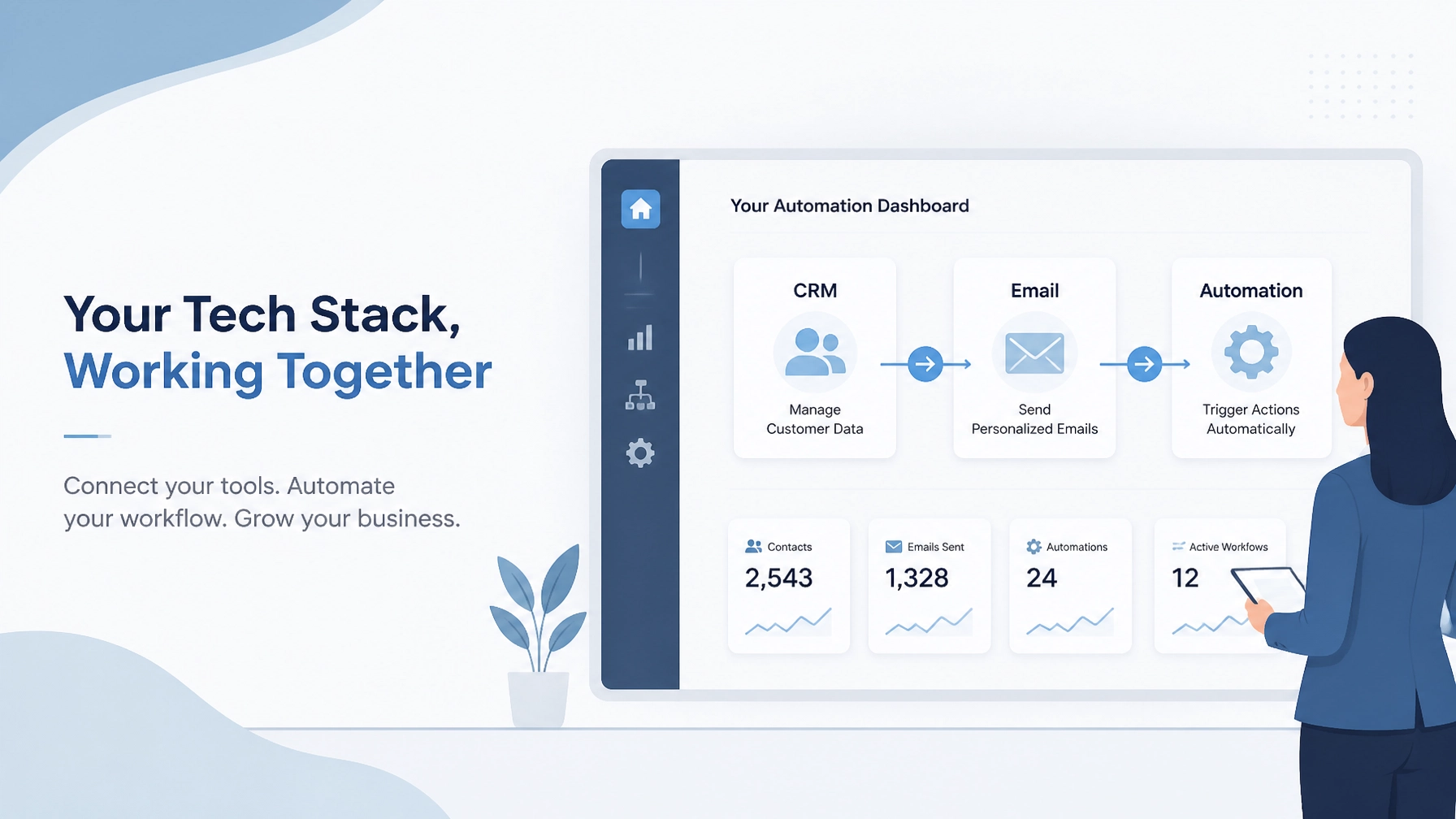
To scale effectively, your tools need to talk to each other. A fragmented tech stack is the enemy of efficiency. Solo founders often fall into the trap of using too many disparate tools, leading to "data silos" where information is lost between apps.
Focus on a centralized system. For UK small businesses, choosing the best CRM software is the foundation of this strategy. A well-configured CRM like HubSpot acts as the "single source of truth" for both you and your VA.
When your VA can log into a CRM dashboard and see exactly which leads need attention, you eliminate hours of back-and-forth Slack messages and emails. This is how you move from chaos to clarity.
Maximizing Lead Conversion with Minimal Effort
One of the most critical areas where a VA and automation can combine for massive growth is lead follow-up. Research shows that following up within 5 minutes can double your lead conversion rate.
As a solo founder, you are often in meetings or deep-work sessions when a lead arrives. You can't always respond in five minutes. However, an automated workflow can send an initial response, and a VA can perform a "triage" on the lead to see if they are a fit, ensuring no opportunities slip through the cracks while you are busy.
SEO and Content: Scaling Your Reach
Scaling isn't just about managing what you have; it's about growing your pipeline. Many solo founders neglect SEO because it feels like a full-time job.
By using a VA to handle the research and formatting of content, and a tech consultant to handle the SEO strategy, you can maintain a high-ranking digital presence without being a marketing expert.
The goal is to create "evergreen" assets that work for you 24/7. Your website should be your best salesperson, bringing in leads while you and your VA focus on closing them.
The Roadmap to a Leaner, Faster Business
If you are a solo founder feeling the weight of your own success, remember that hiring a full-time team isn't the only way forward. In fact, for many, it’s the slow way forward.
The "VA Secret" is actually a system secret. It’s about:
- Auditing your time to find the $20/hr tasks that are killing your growth.
- Standardizing your processes so someone else can follow them.
- Deploying a CRM and Automation to handle the heavy lifting of data and communication.
- Hiring specialized VAs to execute the processes you’ve designed.
This lean approach allows you to scale your revenue while keeping your overhead low and your personal freedom high. It turns your business from a job you own into a machine that works for you.
Ready to stop being the bottleneck in your own business? Whether you need to fix your HubSpot setup or build a scalable system from the ground up, Nepatech Solutions is here to help you bridge the gap between "solo" and "scalable."
Request a free quote today and let’s discuss how we can automate your operations so you can focus on the big picture. Or, if you have specific questions about our tech consulting services, contact us here.