For a long time, the Customer Relationship Management (CRM) system was essentially a digital filing cabinet. It was a place where data went to sit, and in many cases, a place where sales productivity went to die. Founders and sales teams spent hours "feeding the beast": manually entering contact details, logging calls, and updating deal stages.
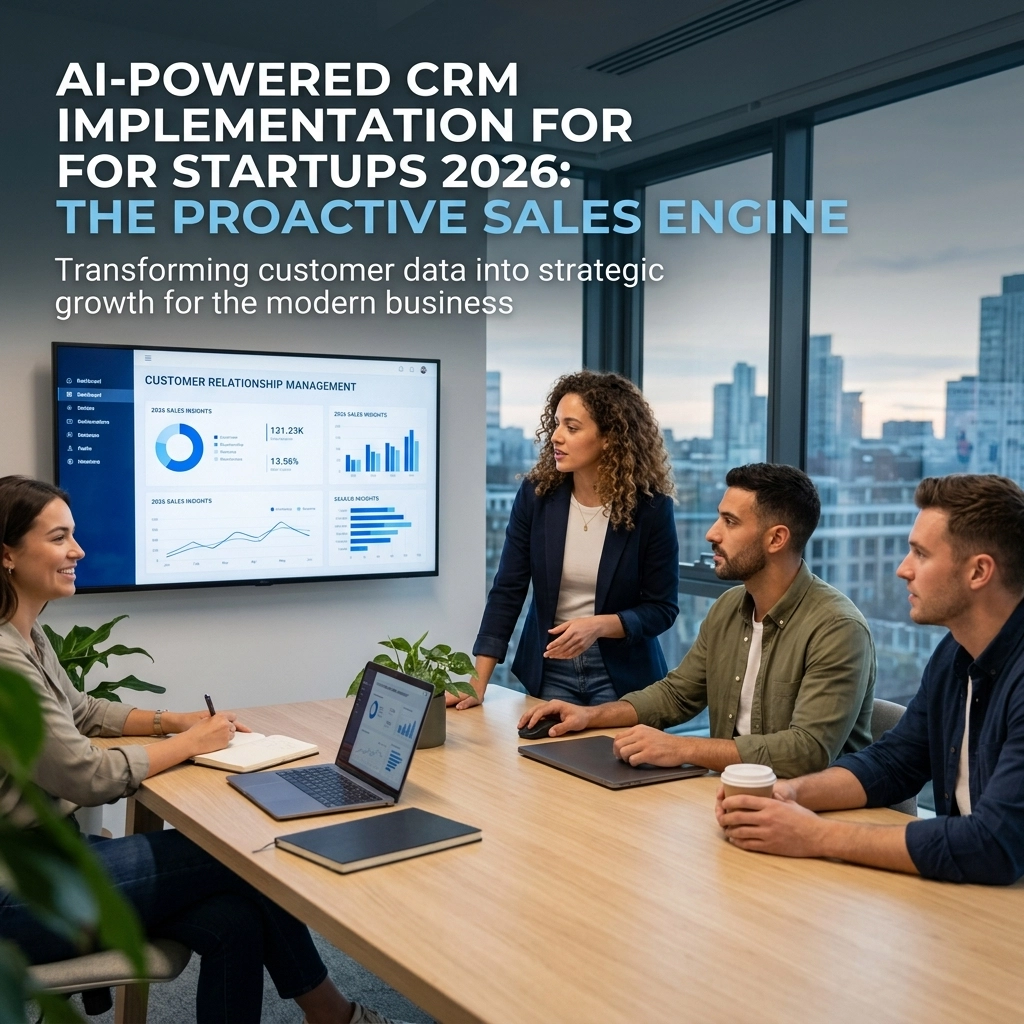
By 2026, the landscape has shifted entirely. We have moved past the era of passive data storage. Today, a CRM is no longer just a database; it is a Proactive Sales Engine.
For startups looking to scale in this competitive environment, the goal is no longer just to "have a CRM." The goal is to implement an AI-powered system that works for the team, rather than the team working for the system.
The Shift from Passive Storage to Proactive Intelligence
In traditional setups, a CRM only knew what you told it. If a sales rep forgot to log a meeting, that data was lost. If they didn't manually set a follow-up task, the lead went cold.
In 2026, AI-powered CRM implementation for startups changes this dynamic. These systems are context-aware. They pull data from your email, your calendar, your LinkedIn interactions, and even your website analytics without you lifting a finger.
The system doesn't wait for your input. It watches the signals and alerts you when a deal is at risk or when a prospect is showing high-intent behavior. This proactive nature is what separates the high-growth startups from those struggling with operational overhead.
Predictive Lead Scoring: Knowing Who to Call First
One of the most significant advantages of modern AI CRMs is predictive lead scoring. In the past, lead scoring was based on static rules: for example, "give a lead 10 points if they download a whitepaper."
Today, AI models analyze thousands of data points to determine the actual likelihood of a conversion. It looks at historical patterns of successful deals and compares them to your current pipeline.
It considers variables such as:
- The frequency and tone of email interactions.
- The prospect’s recent activity on professional networks.
- Industry-wide trends that might impact the prospect’s budget.
- Behavioral signals that humans often overlook.
Instead of a sales rep starting their day wondering who to call, the AI-powered CRM presents a prioritized list. It tells them, "These three leads are 80% likely to close this week; focus here first." This level of strategic analysis ensures that your most expensive resource: your people: is always focused on the highest-value tasks.

The Death of Manual Data Entry
If your sales team is still spending Friday afternoons "updating the CRM," you are losing money. Manual data entry is not just a nuisance; it is a primary cause of data decay and team burnout.
AI-powered CRM implementation for startups in 2026 prioritizes Automated Activity Capture. When a rep sends an email, the CRM captures the content, summarizes the key points, and updates the deal record automatically. When a meeting happens via Zoom or Teams, the AI transcribes the call, extracts action items, and syncs them with the project management tool.
By removing the friction of data entry, startups achieve:
- Cleaner Data: No more typos or missing fields.
- Higher Adoption: Sales reps actually love using the tool because it saves them time.
- Real-time Visibility: Leadership sees an accurate picture of the pipeline as it happens, not a week later.
At Nepatech Solutions, we focus on setting up these "zero-input" environments. We believe that a founder's time is better spent on investor relations and strategy than on checking if a VA logged a phone call correctly.
Next-Best-Action Recommendations
A proactive sales engine doesn't just store data; it provides a roadmap. AI assistants within the CRM now offer "Next-Best-Action" recommendations.
Imagine a scenario where a lead hasn't responded to a proposal in three days. The AI doesn't just send a generic "task reminder." It analyzes the context and suggests: "The prospect just posted about a new product launch on LinkedIn. Send a congratulatory note and re-attach the proposal as a follow-up."
This turns the CRM into a coach. It helps junior sales reps perform like seasoned veterans by providing them with context-aware prompts. It ensures that no deal falls through the cracks simply because someone was too busy to think of a creative follow-up.
Bridging the Gap: Why Implementation Fails
Despite the power of these tools, many startups fail to see a return on investment. This usually happens for two reasons: the system is too complex, or the workflows are poorly defined.
The "AI-powered" tag often leads founders to believe the software will solve all their problems out of the box. The reality is that AI needs a foundation of solid business logic to be effective. If your sales process is broken, AI will simply help you fail faster.
This is where Nepatech Solutions steps in. We don't just "install" software. We build the bridge between these complex AI features and simple, scalable workflows.
Our approach involves:
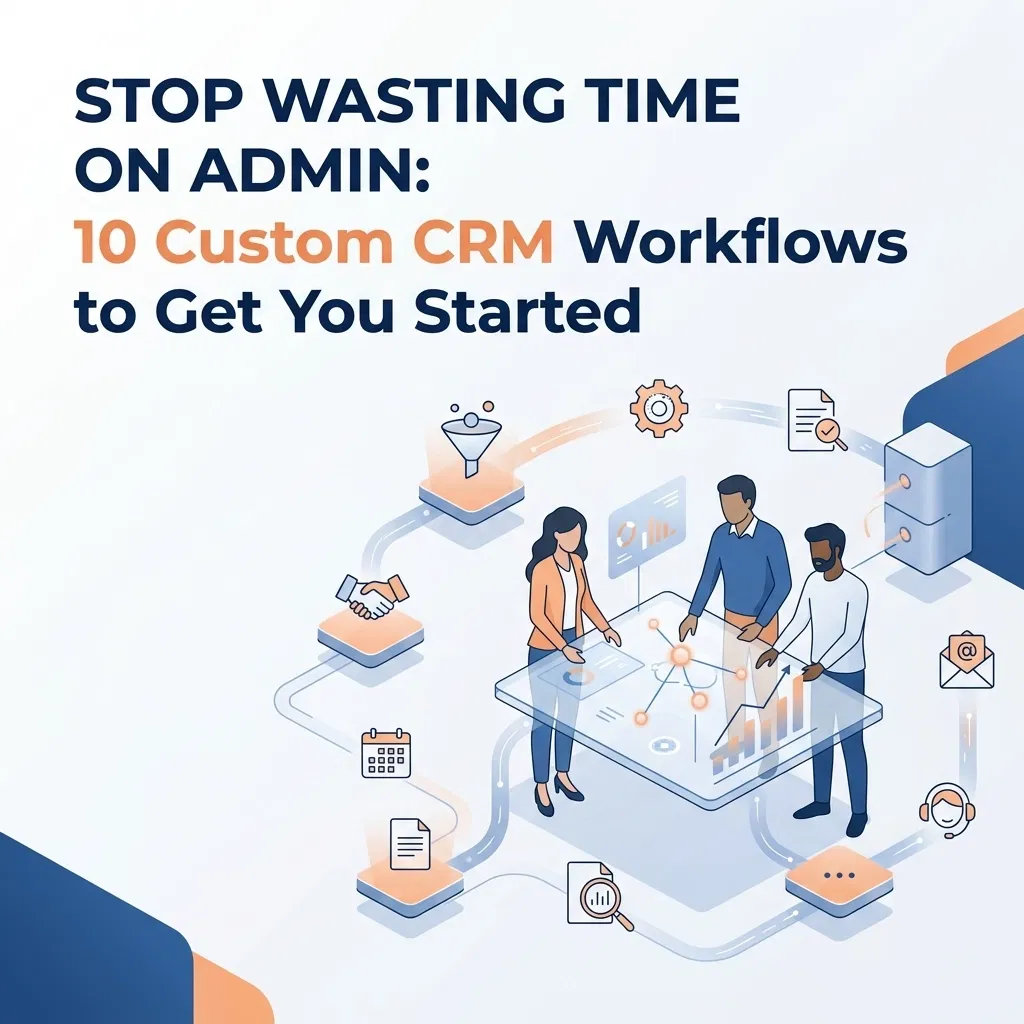
- Workflow Mapping: Defining exactly how a lead moves from "Stranger" to "Customer."
- Integration Support: Connecting your CRM to your marketing automation and communication tools.
- Custom Prompt Engineering: Setting up the AI assistants to speak in your brand's voice and follow your specific sales methodology.
Scaling with Lean Teams
In 2026, the "unicorn" startup isn't necessarily the one with 500 employees. It’s the one with 20 employees and an incredibly efficient tech stack.
By leveraging an AI-powered CRM, a small team can manage a lead volume that would have previously required a massive SDR (Sales Development Representative) department. The proactive engine handles the qualifying, the chasing, and the data management, leaving the humans to do what they do best: building trust and closing deals.
This lean approach reduces overhead and allows startups to remain agile. When you don't have to worry about the "admin" of sales, you can pivot faster and respond to market changes with more precision.

Future-Proofing Your Revenue
The transition to AI-driven sales is not a trend; it is a fundamental shift in how business is done. Startups that continue to rely on manual SOPs and static databases will find it increasingly difficult to compete with those using proactive engines.
A proactive CRM gives you a "Revenue Operations" mindset from day one. It provides the data-driven insights needed to forecast accurately and the automation needed to scale without adding significant headcount.
If you are looking to move away from the "digital filing cabinet" and toward a proactive sales engine, the time to start is now. Whether you are looking for a complete CRM setup or need to optimize your existing workflows with AI, the goal is clarity and efficiency.
Getting Started with Nepatech Solutions
Implementing an AI-powered CRM shouldn't be a months-long project that drains your resources. It should be a strategic upgrade that yields results almost immediately.
At Nepatech Solutions, we specialize in helping remote-first startups and solo founders build these systems. We understand the unique challenges of early-stage growth and provide the technical consulting and virtual assistant support necessary to keep your operations running smoothly.
Don't let your CRM be a graveyard for lead data. Turn it into a proactive engine that drives your business forward.
If you're ready to automate your sales pipeline and eliminate manual entry for good, you can request a free quote or contact us today to discuss your specific needs. Let's build a system that works as hard as you do.