If your traffic has stalled or plummeted in the last six months, you aren’t alone. The SEO landscape of 2026 is fundamentally different from the one we navigated just two years ago.
In 2024, "content is king" often meant "volume is king." Founders and marketing teams leaned heavily into AI-assisted content at scale, focused on high backlink counts, and optimized for specific keywords. In 2026, those same tactics are no longer just "ineffective": they are being flagged as spam.
Google’s latest core updates, powered by advanced Gemini-based semantic filters, have shifted the goalposts. The focus has moved from what you say to why you are the one saying it.
At Nepatech Solutions, we’ve seen this shift coming. As a remote-first team providing SEO support, we’ve spent the last year auditing sites that were once industry leaders but are now struggling to be found.
Here is why your 2024 strategy is failing and how to conduct a 2026 algorithmic audit to fix it.
The Death of "Scaled Content"
In 2024, it was common to see "SEO subfolders" filled with thousands of AI-generated blog posts. The goal was simple: capture every possible long-tail keyword in your niche.
By 2026, Google’s spam policies have evolved to treat "producing content at scale to boost search ranking" as a direct violation, regardless of whether a human or an AI wrote it. The algorithm now looks for "scaled-content abuse."
If your blog features articles that all follow the same predictable structure, offer no new data, and are produced at a rate that suggests automation, you are likely in the crosshairs. Entire subdirectories are being algorithmically demoted, leaving the rest of the domain intact but invisible in search results.

The Solution: Pruning and Consolidation
A 2026 audit starts with pruning. You must identify "thin" content: pages that only rephrase what is already at the top of Google.
- Audit your inventory: Use a tool to find pages with high bounce rates and low time-on-page.
- Consolidate or delete: If you have ten articles about "How to use a CRM," merge them into one authoritative, comprehensive guide.
- Add "Human-Only" layers: Ensure every piece of content has a layer of insight that an AI cannot replicate, such as personal anecdotes or client results.
"Information Gain": The New Currency
The term "Information Gain" used to be a niche SEO patent topic. In 2026, it is the primary ranking factor.
Google’s AI core now asks a simple question: "Does this page add anything new to the internet?" If your article is just a better-formatted version of the top three results, your information gain score is zero.
Search results are now prioritized for pages that offer proprietary data, unique perspectives, or specific implementation details. This is why startups that build scalable systems often rank better; they are writing from the trenches of real-world experience.

How to Achieve Information Gain
- Proprietary Data: Conduct a survey or analyze your own internal data to find trends.
- Case Studies: Instead of writing "How to Scale," write "How We Scaled Client X by 40% in 3 Months."
- Expert Commentary: Interview your internal team members for quotes and specific technical nuances that aren't common knowledge.
E-E-A-T 2026: Beyond the Acronym
Experience, Expertise, Authoritativeness, and Trustworthiness (E-E-A-T) have been around for years, but in 2026, they are no longer "suggestions." They are technical requirements.
Google now looks for "Experience" signals: proof that the author has actually used the product or performed the service they are writing about. This is why anonymous blogs and generic "staff writer" profiles are disappearing from page one.

Audit Your Trust Signals
- Author Credentials: Every post should have a clear author bio with links to their LinkedIn or professional portfolio.
- Citations and References: Link to high-authority external sources (like Google's own documentation on core updates) to back up your claims.
- Transparency: Include "Last Updated" dates and methodology sections for your data-driven content.
Backlinks: The "Support Act," Not the Headliner
For decades, backlinks were the king of SEO. If you had the most links, you won. In 2026, backlinks have moved into a "corroboration" role.
Google now uses backlinks to verify the trust signals it sees on your page. If you have 5,000 backlinks but your content has low "Information Gain" and poor E-E-A-T, those links are increasingly neutralized. Worse, if those links come from generic guest post sites or link farms, they can trigger a manual spam action.
The goal in 2026 is quality over quantity. One link from a niche-relevant, high-authority site is worth more than 1,000 low-quality directories. This is where virtual assistant support can be invaluable: helping you reach out to real partners for genuine collaborations rather than buying links in bulk.
The "Command Center" Approach to Operations
SEO in 2026 is not an isolated task; it is a symptom of how your business operates. A messy, fragmented digital operation leads to fragmented, low-quality content.
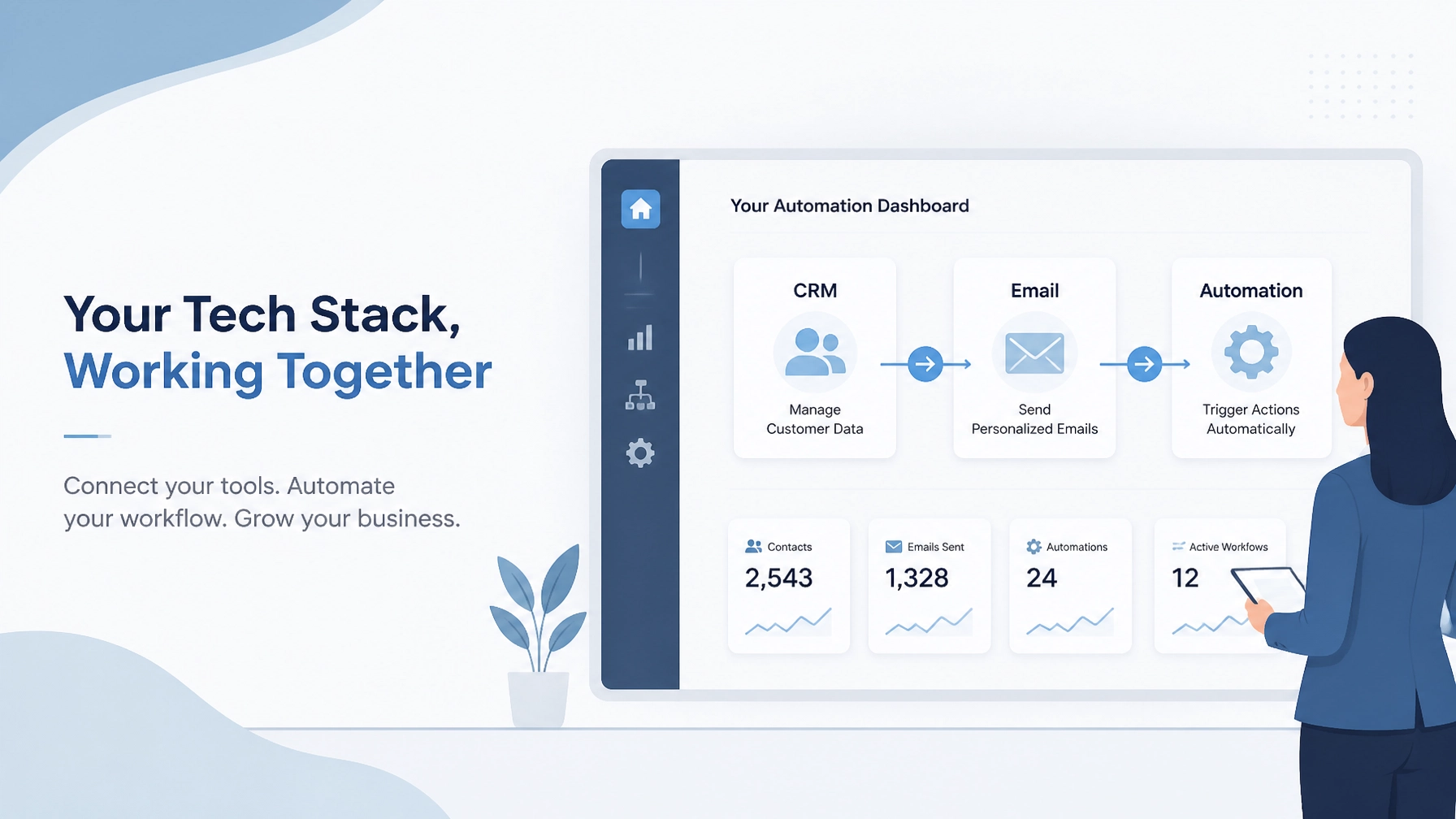
Modern startups are moving toward a "Command Center" model. This involves integrating your CRM, your project management tools, and your SEO strategy into a single source of truth. When your operations and systems are streamlined, your team has the bandwidth to create the "Information Gain" content that Google demands.

At Nepatech, we help founders transition from "doing SEO" to "building authority." This includes:
- CRM Integration: Using HubSpot or Zoho to track which content actually drives sales, not just traffic.
- Process Automation: Automating the distribution and repurposing of high-value content.
- Scalable Workflows: Creating SOPs that ensure every piece of content meets the 2026 quality threshold.
Conclusion: Focusing on the Bigger Picture
The shift in 2026 is actually good news for legitimate businesses. The removal of "scaled spam" means that if you are providing real value, you have a better chance of being seen.
However, the technical complexity of maintaining these standards is rising. You can no longer set and forget your SEO strategy. It requires constant auditing, a focus on trust, and a commitment to adding something new to the conversation.
If your current strategy feels like it belongs in 2024, it’s time for an upgrade. At Nepatech Solutions, we handle the technical heavy lifting: from CRM management to SEO audits: so you can focus on growth.
Ready to future-proof your digital presence? Contact us today to learn how we can support your journey from startup to scale-up.